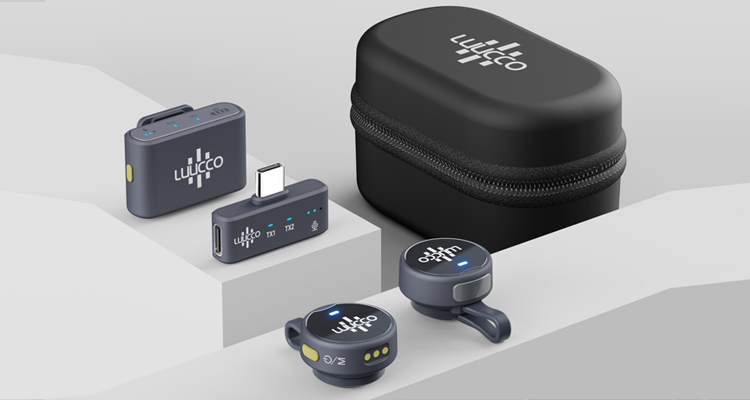



Wireless microphones have become essential tools for modern content creation, live broadcasting, interviews, online education, and video production. As creators increasingly record in dynamic environments—cafés, streets, offices, or outdoor locations—capturing clear audio becomes more challenging. Background noise such as wind, traffic, keyboard typing, or crowd chatter can significantly degrade recording quality.
Noise reduction technology in wireless microphones is designed to address this challenge, ensuring that the speaker’s voice remains clear, intelligible, and professional even in noisy environments. This article explains how noise reduction works, the technologies involved, and why it matters for creators and professionals.
Noise reduction refers to a set of technologies and signal-processing techniques used to minimize unwanted ambient sounds while preserving the primary voice signal. The goal is to isolate the speaker’s voice and suppress background noise such as:
Effective noise reduction improves audio clarity, making recordings sound cleaner and more professional without requiring extensive post-production editing.
Modern wireless microphones typically combine several approaches to reduce noise. Each method targets different types of interference.
Digital Signal Processing (DSP) is one of the most widely used noise reduction technologies. After the microphone captures sound, the audio signal is processed by a built-in chip that analyzes and filters frequencies.
DSP algorithms can:
Advanced DSP systems operate in real time, meaning the noise reduction happens instantly during recording or transmission.
Environmental Noise Cancellation focuses specifically on reducing surrounding ambient sounds. ENC technology uses algorithms to differentiate between the speaker’s voice and environmental noise.
It works by:
This technology is especially useful for outdoor recordings, interviews, and vlog-style content.
Hardware design also plays an important role in noise reduction. Many wireless microphones use directional pickup patterns to focus on sound coming from a specific direction—typically the front.
Common pickup patterns include:
Directional microphones naturally reduce background noise before digital processing even begins.
Outdoor recording often introduces wind noise, which creates low-frequency rumbling sounds. Wireless microphone systems often include wind protection accessories such as foam covers or furry windshields.
These accessories help:
Combined with digital filtering, they significantly improve audio performance in windy environments.
Human speech typically falls within the frequency range of approximately 85 Hz to 255 Hz for fundamental tones and higher harmonics for clarity. Noise reduction systems use filters to focus on these speech frequencies while reducing sounds outside the range.
For example:
This filtering helps maintain a balanced and natural sound profile.
Integrating noise reduction technology into wireless microphones provides several practical advantages:
Background sounds are minimized, allowing the speaker’s voice to remain the focus of the recording.
Cleaner recordings mean creators spend less time removing noise during audio editing.
Whether recording indoors or outdoors, noise reduction ensures consistent audio performance.
Clear audio enhances audience engagement for videos, podcasts, and live streams.
Noise reduction technology is particularly valuable across a wide range of applications:
As portable recording setups become more popular, built-in noise reduction has become a key feature for creators who need professional sound without complex audio equipment.
Noise reduction technology plays a crucial role in the performance of wireless microphones. By combining digital signal processing, environmental noise cancellation, directional microphone design, and intelligent filtering, modern wireless microphones can deliver clear and reliable audio even in challenging environments.